When we try to explain what music therapy is to the general public, it is still not uncommon to see puzzled reactions – some ask questions such as, “So what exactly do you do in music therapy? Do you play the client’s favourite music on Spotify?”, “Do you teach disabled people how to play an instrument?” or “Do you play music on an instrument for the clients?”.
While the above-mentioned methods can all be part of the therapy process, simply playing or teaching music is fundamentally different from music therapy. The key difference between music education and music therapy is in its goal setting – in music education, the goal is to teach someone how to play an instrument and to cultivate musical knowledge and skills, whereas in music therapy, a variety of musical activities are used to achieve non-musical goals for clients. The non-musical goals of therapy clients can include developing social-skills, fine and gross motor skills, verbal and non-verbal communication skills, cognitive skills, and reducing agitation and stress.
So, what exactly do you do in music therapy sessions?
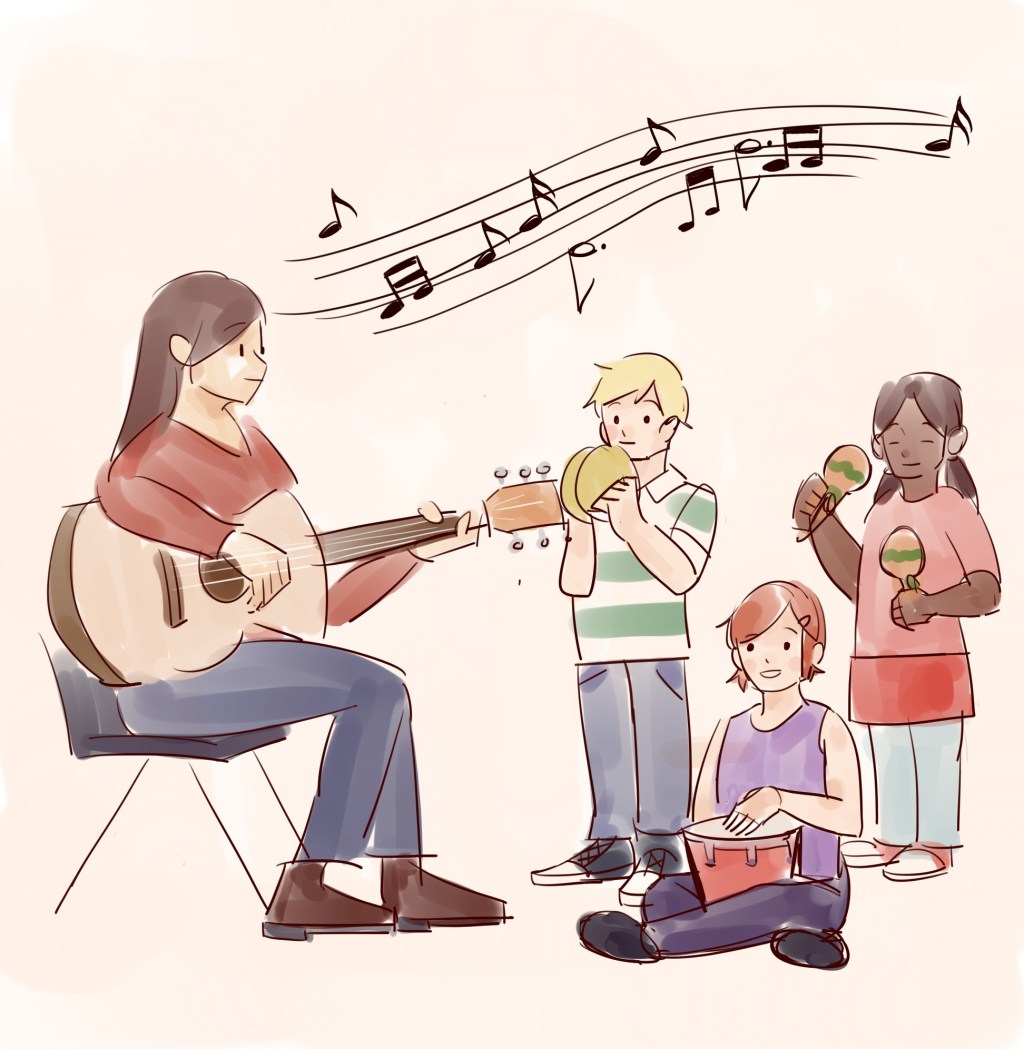
In a typical music therapy session, the music therapist uses methods such as singing, improvisation, playing a variety of instruments and movement to facilitate meaningful interactions with the clients.
For example, the therapist may use singing a certain command for a client who may not otherwise respond easily to verbal commands; the therapist may sing “Come and play the drum with me” instead of speaking it. This form of communication can draw the client’s attention more effectively, because music engages and alerts people.
Musical improvisation which refers to spontaneous music making, involves playing chosen instruments together without any specific rules where the clients can freely express themselves. In this process, the music therapist carefully listens, matches and mirrors the client’s musical expressions to achieve meaningful connections, and to help foster non-verbal communication and social skills such as listening and turn-taking skills. The therapist attempts to enhance the client’s expressions by modelling different dynamics, rhythms and melodies.
Playing a variety of instruments with the help of a therapist aid in the client’s physical development and executive functioning. Here, the goal is not to teach how to play an instrument correctly, but rather to support and foster the client’s coordination and cognitive functioning.
Furthermore, singing favourite songs together helps clients to feel happier and less agitated. Discussions of the lyrics of the favourite songs lead to reflections of the clients themselves helping them to express thoughts and feelings.
 Sparkle Music Studio
Leave a comment