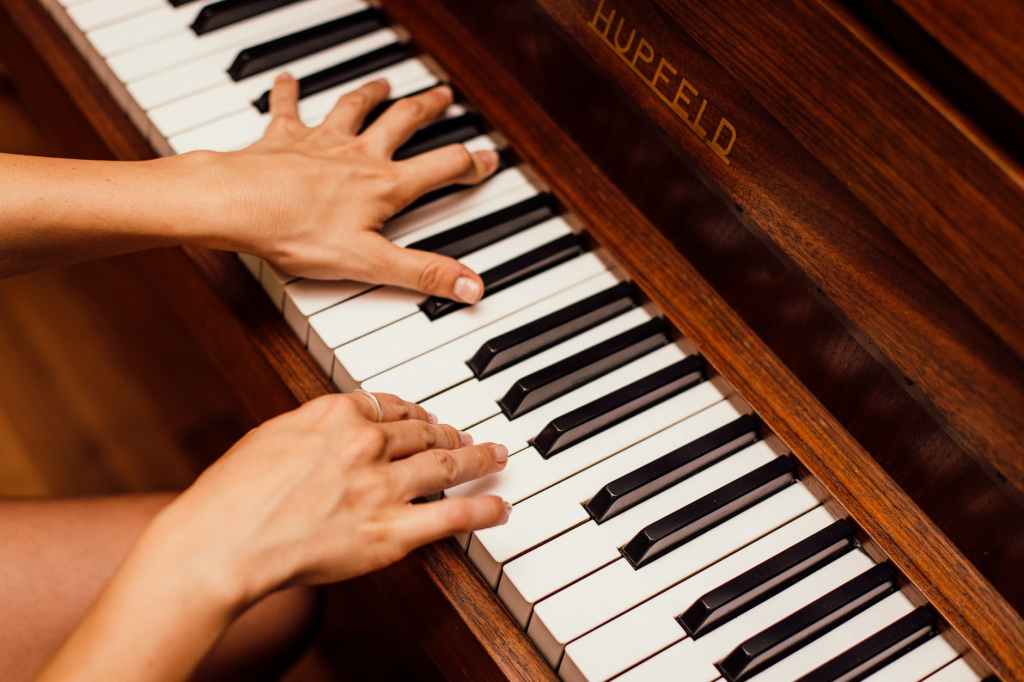
Ever wanted to make up something on the piano but had no idea how and where to start? Did you want to express how you were feeling right now on the piano but didn’t quite know how?
Making up music as you play or creating music on-the-go is called musical improvisation. It means playing music spontaneously without any preparation, with no music in front of you. When we think of learning an instrument, it is very common to think that you learn to read music written on the score and reproduce it on the instrument. But did you know that improvisation existed way before our time, in fact from the very earliest times? For example, in the Medieval period (5th-15th century), improvisation was an important factor in the European music. In the musical style such as organum, singers were required to make up another melody on top of the notated base line. Many well-known composers know such as J.S.Bach, Mozart, Medelssohn and Chopin were masters of improvisation and it was in fact an essential part of their writing process. In non-Western cultures, improvisation was and still is a core method of musical performance in places such as Africa and India where music has been passed down orally.
Improvisation is beneficial to the piano learners or any other people who are learning other form of arts because it helps the artists to develop so many other skills apart from just reading the score and reproducing it. The act of improvising on the piano promotes the development of aural skills such as playing by ear, listening to one’s playing as well as other people’s playing. It also promotes creativity and imagination as the pianist is allowed to be much freer and more flexible. Improvisation can work as an inspiration for a new piece of music for the composer. It also serves as an excellent outlet for self-expression. For example, in music therapy, improvisation is used as a common method of therapeutic medium through which the clients who are not able to express themselves verbally can express their thoughts and feelings. For these reasons, I try to incorporate improvisation in my piano lessons whenever possible, whether the student is young or older.
Although improvisation means making-up-as-you-go, it doesn’t mean you are just playing random notes. Of course, when you are improvising alone, you are free to play however you like. However, for an improvised music to be more meaningful, or if you are playing with another person or in a group, there must be a framework on which the pianist can explore various melodies and harmonies which have a certain direction and style.
In my lessons, I suggest a simple play rule such as 1-note, 2-note or 3-note improvisations or improvising on a single or two chords only, or using one scale or a mode only. For little children who are not yet skilled much on the piano, I play a certain thematic material on the bass notes while the child can play on the high notes using only the black or the white keys. After the improvisation, I sometimes record it and listen to it together, then encourage the student to reflect on it by thinking about the mood of the piece, changes in dynamics, and if he/she had any imagery while playing the music. We try to give it a title as well, or if we already had a theme before the play, we talk about how our music reflected that theme. The students are often hesitant at first at the idea of playing freely, as they don’t know where to begin and how to keep it going. However, with a little guidance and a simple framework, the students enjoy creating their own music and they feel proud of themselves.
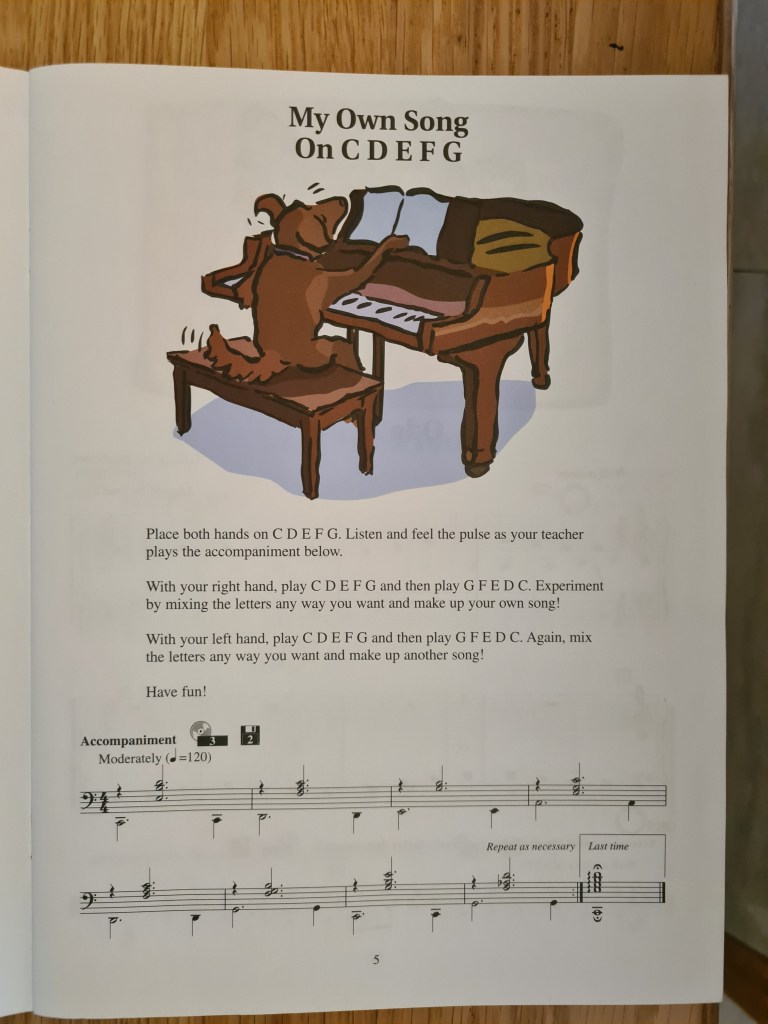
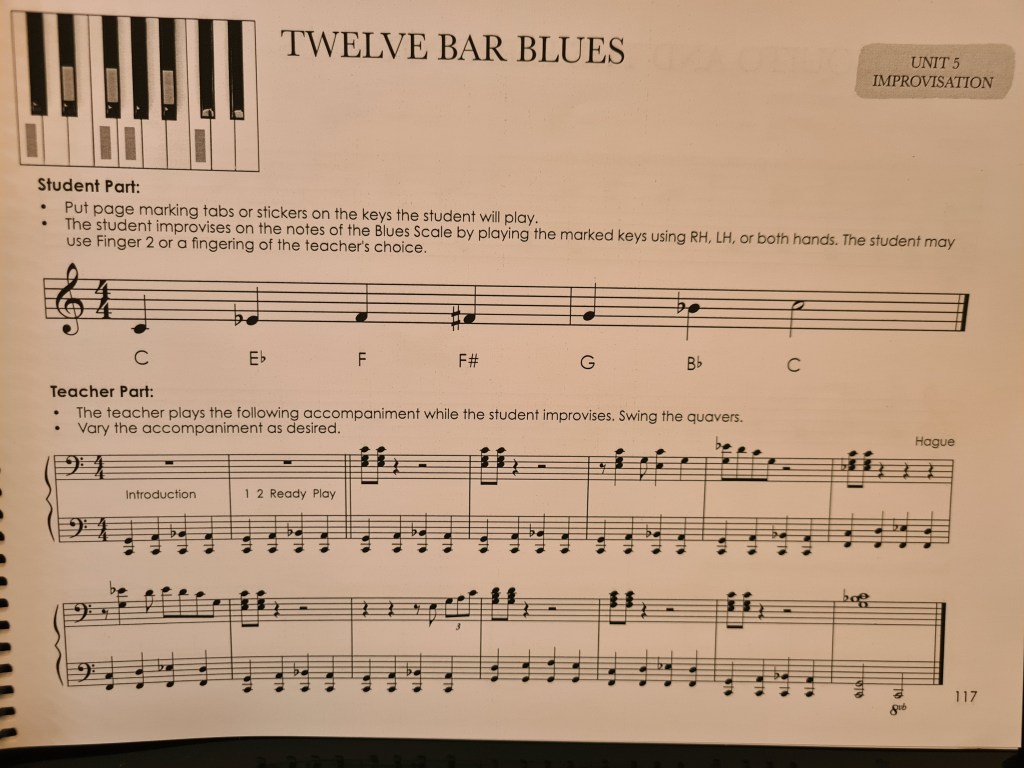
Learning to improvise on the piano is a great way for the piano students to develop musicianship while also being able to express him/herself which helps with emotional well-being. It can also boost creativity and imagination, and moreover it is simply fun! It also helps to develop connection between the teacher and the student which will help with positive learning experience overall.
References
Patterson, J. 8 Surprising Benefits of Music Improvisation. www.lifehack.org
Wigram, T. 2004, Improvisation, Jessica Kingsley Publishers, UK.
 Sparkle Music Studio
Leave a comment